Pre-Purchase Exam: Beyond Soundness
By Mark Dunlop
A pre-purchase exam is more than a soundness check. Discover essential evaluations to protect your equine investment and ensure a suitable horse for your needs.
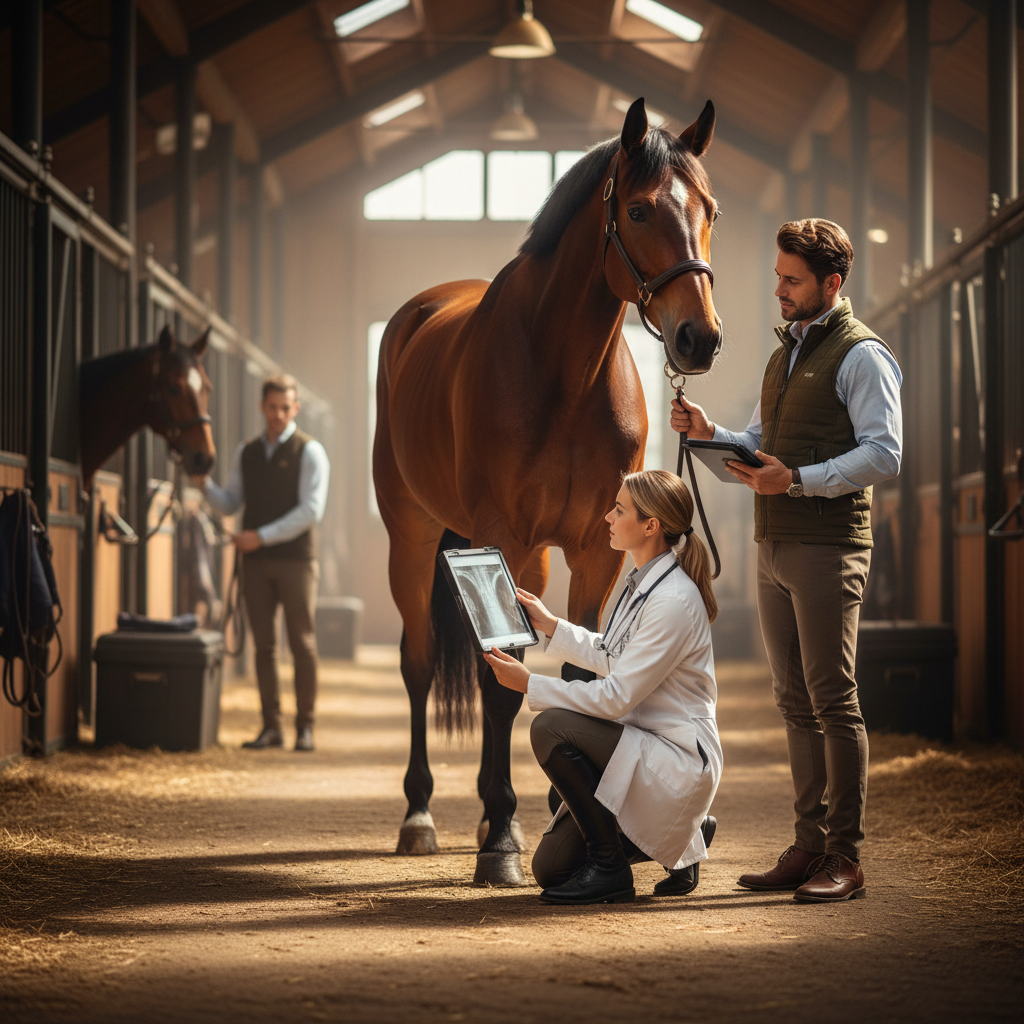
More than 30% of horses change homes annually in the United States, representing a significant financial and emotional investment for buyers. While a basic soundness examination is crucial, a comprehensive Pre-Purchase Examination (PPE) extends far beyond a simple jog line and flexion tests. A truly thorough PPE investigates the whole horse, uncovering potential issues that could impact performance, longevity, and suitability for its intended role. This article delves into the critical elements of an advanced PPE, equipping prospective buyers with the knowledge to make informed decisions.
The Foundation: A Comprehensive Physical Examination
Every PPE begins with a meticulous physical assessment by a qualified veterinarian. This isn't just a quick once-over; it's a systematic review of the horse's overall health. The vet will assess vital signs (heart rate, respiratory rate, temperature), body condition, and hydration. They will meticulously examine the eyes for conditions like cataracts or uveitis, and the mouth for dental issues, malocclusions, or old injuries that could affect feeding or bitting. Auscultation of the heart and lungs is standard to detect murmurs, arrhythmias, or respiratory abnormalities. Skin and coat quality can indicate underlying nutritional deficiencies or dermatological conditions. Palpation of the entire body, from poll to tail, helps identify muscle asymmetry, sensitivity, or signs of past trauma.
Beyond the Superficial: Body Condition Scoring and Nutrition
Evaluating the horse's Body Condition Score (BCS) is a crucial, often overlooked, aspect of the physical exam. Using the Henneke 1-9 scale, a BCS between 5-6 is generally considered ideal for most horses. A horse that is significantly underweight (BCS 3 or below) may be hiding underlying health issues, parasitic burdens, or chronic pain, while an overweight horse (BCS 7 or above) can be prone to metabolic conditions like insulin dysregulation or laminitis. Discussing the horse's current diet and feeding regimen with the seller and understanding its implications for future management is vital. Consider utilizing a Horse Feed Calculator to estimate daily requirements based on the horse's weight and workload, helping you project future feed costs and nutritional needs accurately.
Advanced Lameness Evaluation and Imaging
While traditional flexion tests and lameness localization on a hard surface are standard, a truly exhaustive PPE incorporates more advanced diagnostics. These can identify subtle issues not apparent during basic evaluation, particularly in performance horses.
Dynamic Lameness Assessment
Observing the horse under saddle, if appropriate for its training level, provides invaluable information. This allows the veterinarian to assess gait quality, balance, and responsiveness under real-world conditions. Lunging on various surfaces (hard, soft, uneven) can also highlight lameness patterns exacerbated by specific movements or footing.
Diagnostic Imaging Modalities
- Radiographs (X-rays): Standard projections of commonly affected joints (fetlocks, hocks, stifles, navicular bones) are essential. Radiographs can reveal degenerative joint disease, osteochondritis dissecans (OCD) lesions, subchondral bone cysts, or evidence of past fractures. For high-level performance horses, full-limb or specific joint series may be warranted. The AAEP (American Association of Equine Practitioners) provides detailed guidelines on recommended radiographic views for PPEs.
- Ultrasound: Soft tissue structures—tendons, ligaments, and joint capsules—are best evaluated with ultrasound. This is particularly important for horses with a history of lameness, or those destined for disciplines involving high-impact work. Conditions like suspensory ligament desmitis, superficial digital flexor tendonitis, or meniscal tears in the stifle are readily identified. The cost for these can vary widely by region, from $250-$800 per area, according to sources like The Horse magazine.
- MRI (Magnetic Resonance Imaging): For highly localized and persistent lameness where radiographs and ultrasound are inconclusive, MRI provides unparalleled detail of bone and soft tissue structures within the hoof capsule or other complex anatomical regions. While costly ($1,500 - $3,000+), it can be a prudent investment for a top-tier athlete.
- Scintigraphy (Bone Scan): This nuclear medicine technique detects areas of increased metabolic activity in bone, indicating inflammation, stress fractures, or early degenerative changes. It's particularly useful for identifying subtle, multifocal lamenesses that are difficult to pinpoint with other methods.
Internal Health: Bloodwork and Organ Systems
Blood tests provide a snapshot of the horse's internal health, revealing potential systemic issues that might not be outwardly visible.
- Complete Blood Count (CBC): Evaluates red and white blood cells, indicating anemia, infection, inflammation, or immune system status.
- Serum Chemistry Panel: Assesses organ function (kidney, liver), muscle enzymes (indicating muscle damage), electrolyte balance, and protein levels. This can identify conditions like chronic liver disease, early kidney compromise, or PSSM (Polysaccharide Storage Myopathy) in susceptible breeds.
- Coggins Test (EIA): Mandatory in many regions for interstate travel or sale, this screens for Equine Infectious Anemia, a viral disease. USDA regulations often dictate the recency required for a valid Coggins test.
- Drug Screening: For high-value horses, or where there are suspicions, a drug screen can detect sedatives, pain medications, or performance-enhancing drugs that might mask underlying conditions. This is an optional but sometimes critical addition.
Respiratory and Cardiovascular Systems
A thorough assessment of these systems is non-negotiable, especially for horses intended for athletic careers.
- Respiratory Exam: Includes auscultation at rest and after exercise, rebreathing exams, and potentially endoscopic evaluation of the upper airways. Conditions like recurrent airway obstruction (RAO, or "heaves"), guttural pouch mycosis, or laryngeal hemiplegia ("roaring") can severely limit a horse's performance. Endoscopy typically adds $150-$400 to the PPE cost.
- Cardiac Exam: Auscultation for murmurs and arrhythmias is standard. For competition horses, an electrocardiogram (ECG) or cardiac ultrasound (echocardiogram) may be recommended to rule out significant cardiac abnormalities that could lead to sudden collapse or poor performance.
Reproductive and Ocular Examinations
While often overlooked in general purpose horses, these aspects are vital for breeding animals or those destined for specific roles.
- Reproductive Exam: For mares intended for breeding, a comprehensive uterine exam (palpation, ultrasound, culture, biopsy) is essential. Stallions require a breeding soundness exam, including semen evaluation. These specialized exams can add $300-$1,000 to the PPE, depending on the scope.
- Ocular Exam: Beyond a basic visual check, a thorough ophthalmic exam with an ophthalmoscope can detect subtle changes in the retina, lens, or cornea. Conditions like equine recurrent uveitis (ERU), which can lead to blindness, are important to identify.
Behavioral Assessment and Suitability
This crucial, often qualitative, component assesses the horse's temperament and trainability. Observing the horse in various settings—in the stall, turned out, being handled, and under saddle—provides insight into its personality and potential for the intended discipline. A nervous or reactive horse may not be suitable for a beginner rider, regardless of its physical soundness. Discussing any history of cribbing, weaving, or other stable vices is also important, as these can indicate stress or underlying issues. It's also wise to research typical breed temperaments; for instance, a quarter horse may have a different natural disposition than an Arabian. Consider how the horse's natural weight may fluctuate and use a Horse Weight Calculator to monitor its condition over time in your care.
Navigating the PPE Process: Key Considerations
- Choose Your Own Vet: Always use your veterinarian, not the seller's. This ensures an unbiased assessment with your interests paramount.
- Define the Scope: Clearly communicate your expectations and the horse's intended use to the vet. This helps them tailor the exam to your needs and budget.
- Review Findings Thoroughly: Don't hesitate to ask questions. Understand the implications of any findings, whether minor or significant. A "failed" PPE is not necessarily a "bad" horse; it might just be unsuitable for your specific purpose.
- Consider Insurance: Many insurance providers require a PPE for major medical or mortality coverage, especially for horses over a certain value or age. Be aware that pre-existing conditions identified during the PPE may be excluded from coverage.
- Written Report: Insist on a detailed written report outlining all findings, diagnostics performed, and a summary opinion. This document is crucial for your records and potential future reference.
The cost of a comprehensive PPE varies significantly based on location, the veterinarian's expertise, and the scope of diagnostics. A basic exam might start at $300-$500, while a detailed exam with extensive imaging can easily reach $1,000-$2,500, and even higher for specialized procedures. However, this investment pales in comparison to the potential costs of purchasing a horse with unforeseen health issues, which could involve thousands in veterinary bills, lost training time, and emotional distress.
FAQ: Pre-Purchase Exam
Q: What is the single most important thing to do before a PPE?
A: Hire your own veterinarian, independent of the seller, and clearly communicate the horse's intended use and your specific concerns.
Q: Can a horse "fail" a PPE?
A: A horse doesn't truly "fail" a PPE. Instead, the examination reveals findings that may deem the horse unsuitable for your specific intended purpose or present a higher risk of future issues. It's about suitability, not a pass/fail grade.
Q: How long does a comprehensive PPE take?
A: Depending on the scope and the diagnostics performed, a comprehensive PPE can take anywhere from 2 to 6 hours, or even longer if specialized imaging is required at a referral center.
Q: Should I get a PPE for a lower-priced pleasure horse?
A: Absolutely. While the scope might be adjusted, even a pleasure horse can incur significant veterinary costs if health issues are present. The emotional bond and potential expenses make a PPE a wise investment regardless of initial purchase price.
Q: What happens if issues are found during the PPE?
A: You have several options: negotiate a lower price, request the seller cover treatment, ask for a re-examination after treatment, or walk away from the purchase. Your veterinarian will help you understand the long-term implications of any findings.
This article is general information, not veterinary advice. Talk to your veterinarian about your horse.