Beyond the Float: Selecting Top Equine Dental Professionals
By Claire Halden
Choosing the right equine dental professional is critical for your horse's health. Discover what truly sets apart exceptional practitioners from a basic "float" service, ensuring optimal oral care.
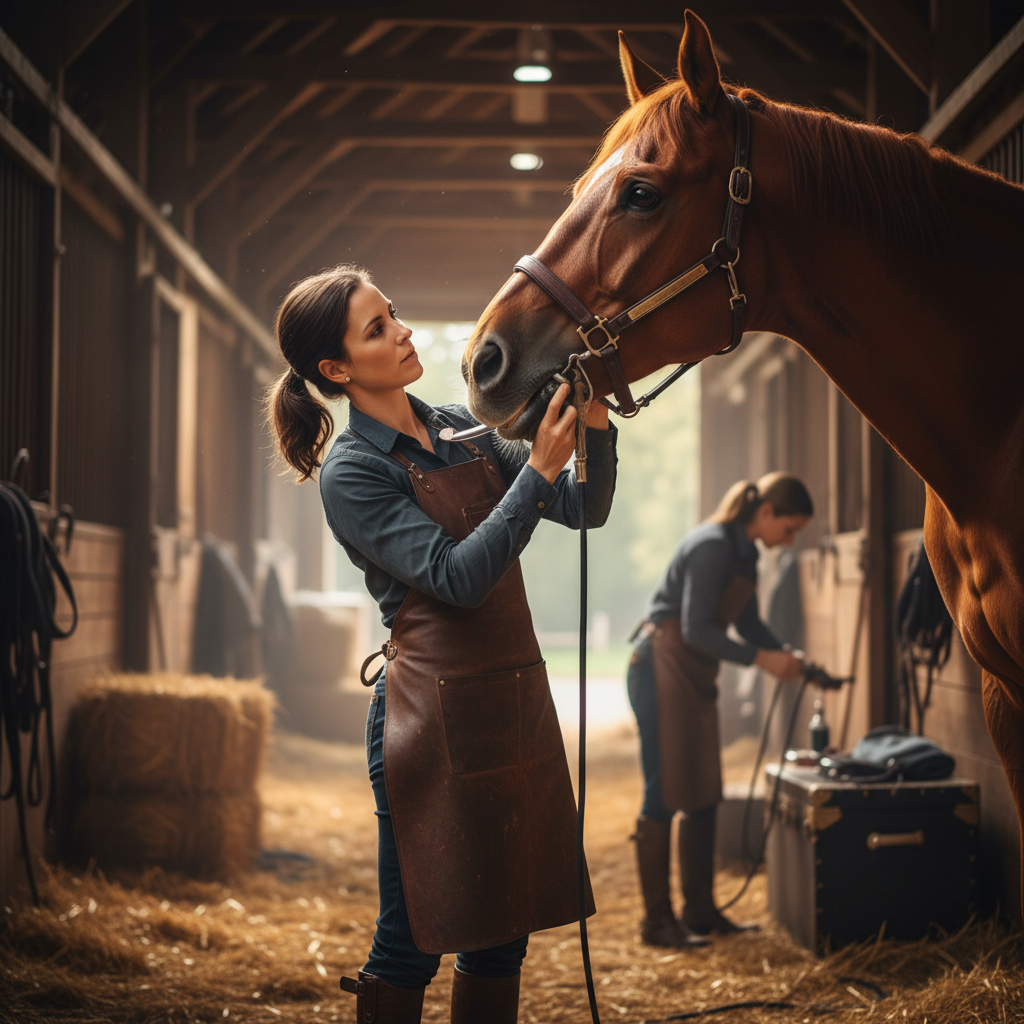
Every year, thousands of horses silently suffer from preventable dental issues, impacting their comfort, performance, and overall health. A 2013 study published in the Journal of Equine Veterinary Science indicated that up to 70% of horses may have some form of dental pathology. Proper equine dental care extends far beyond a routine "float"; it requires a skilled professional with extensive training, appropriate equipment, and a deep understanding of equine anatomy and physiology. Selecting the right practitioner is a decision that significantly influences your horse's longevity and quality of life.
This article delves into the critical factors for evaluating equine dental professionals, helping you distinguish between adequate and exceptional care. We'll cover qualifications, equipment, procedural best practices, and what questions to ask to ensure your horse receives the best possible oral health management.
The Evolving Landscape of Equine Dentistry
Equine dentistry has advanced dramatically over the past few decades. Historically, a "float" (rasp or file sharp enamel points) was often the extent of dental care. While still a fundamental procedure, modern equine dentistry encompasses a holistic approach, addressing issues from developmental abnormalities in foals to complex extractions in seniors. This shift demands professionals with specialized knowledge and continuous education.
Understanding Professional Designations
In the United States, equine dental professionals generally fall into a few categories, each with distinct training pathways and scopes of practice:
- Veterinarians (DVM/VMD): All licensed veterinarians receive some training in equine dentistry during their veterinary curriculum. Many pursue further education through internships, residencies, or continuing education courses focused on dentistry. A DVM can perform any dental procedure, including sedation and extractions.
- Veterinary Dentists (DACVD): These are veterinarians who have undergone rigorous, board-certified training in veterinary dentistry, earning Diplomate status from the American Veterinary Dental College (AVDC). While not all focus exclusively on equids, those who do represent the pinnacle of specialized expertise.
- Equine Dental Technicians (EDTs) / Equine Dentists: These non-veterinary professionals specialize in equine dental care. Their training and legal scope of practice vary significantly by state and country. Organizations like the International Association of Equine Dentistry (IAED) offer certification programs. Some states allow EDTs to perform procedures like routine floating, while others require direct veterinary supervision or refer all dental work to DVMs. Always verify the legal standing of an EDT in your region.
Key Takeaway: For comprehensive care, especially involving sedation, extractions, or complex pathology, a licensed veterinarian or a veterinary dentist is essential. EDTs can be valuable members of a dental care team, performing routine floats under appropriate legal guidelines.
Essential Equipment and Techniques
Quality dental care is impossible without the right tools. Primitive hand rasps have largely been replaced by more advanced equipment that ensures precision, safety, and efficiency.
Modern Dental Equipment Checklist
When evaluating a professional, observe their equipment and ask about its use:
- Full Mouth Speculum: A vital safety tool that keeps the horse's mouth open, protecting both the horse and the practitioner. Ensure it's well-maintained and appropriately sized.
- Power Dental Tools: Modern rotary instruments (e.g., dremels, burrs) allow for more precise and less traumatic reduction of enamel points, wave mouths, and other abnormalities than traditional hand floats. These require skilled use to prevent thermal damage to the teeth. Ask about low-speed, water-cooled systems, which are preferred.
- Headlamp and Oral Endoscope/Mirror: Proper illumination and visualization are non-negotiable. A good headlamp is essential, and an oral endoscope or large dental mirror allows for thorough examination of the entire oral cavity, including hard-to-reach areas like the caudal molars.
- Sedation: For most dental procedures, especially with power tools, sedation is crucial for the horse's comfort, safety, and the quality of the work. A veterinarian should administer and monitor sedation. In some regions, EDTs may work under remote veterinary direction for sedation, but direct veterinary presence is often ideal.
- Dental Radiography (X-ray): For investigating issues like apical abscesses, fractured teeth, or periodontal disease, dental radiographs are invaluable. Not all general equine vets have this specialized equipment, but it's a hallmark of advanced dental practice.
Beyond the Float: Comprehensive Examination
An excellent dental professional does more than just float teeth. They perform a thorough oral examination that includes:
- External Oral Examination: Palpating the jaw, temporomandibular joint (TMJ), and salivary glands for asymmetry, pain, or swelling.
- Internal Oral Examination: Systematically checking every tooth for sharp points, hooks, ramps, missing teeth, fractured teeth, periodontal disease, diastemata (gaps between teeth), and soft tissue lesions. The AAEP (American Association of Equine Practitioners) guidelines emphasize a comprehensive 10-point oral exam.
- Occlusal Assessment: Evaluating how the upper and lower teeth meet, identifying imbalances that can affect chewing efficiency and comfort.
Asking the Right Questions: Due Diligence
Don't hesitate to interview potential dental professionals. Their responses will reveal their approach and level of expertise.
- What are your qualifications and certifications in equine dentistry? (e.g., DVM, DACVD, IAED certification, specific continuing education courses).
- What equipment do you use for routine dental procedures and for more complex cases? (Look for power tools, speculum, headlamp, endoscope/mirror, and inquire about sedation practices).
- How do you manage pain and sedation during dental procedures? (A veterinarian should oversee sedation, ensuring appropriate drug choice and monitoring).
- Can you describe your process for a comprehensive oral examination? (Listen for detailed steps, not just "I look in their mouth").
- What is your philosophy on frequency of dental care? (While annual exams are common for adult horses, frequency can vary based on age, diet, and individual needs. Foals and seniors may need more frequent checks. For example, a senior horse on a soft diet may need less frequent floating than a young performance horse.)
- What are your emergency procedures for dental issues? (Knowing their availability and referral process is important).
- Can you provide references from other horse owners or local veterinarians?
Cost Considerations and Regional Differences
The cost of equine dental care varies widely based on geographic location, the professional's qualifications, and the complexity of the procedure. A routine float by an EDT might range from $80-$150, whereas a veterinarian-performed routine float with sedation could be $150-$300. More complex procedures, such as extractions, advanced diagnostics (like X-rays, which can add $50-$150 per view), or corrective work, can easily run into $500-$1000+ per horse.
Regional differences are significant. For example, a routine vet-float in rural Iowa might be at the lower end of the spectrum, while the same service in an affluent equestrian community in California or Florida could be at the higher end. Always get a clear estimate before treatment.
Consider the long-term savings. Preventing major issues through regular, high-quality care is almost always more cost-effective than treating advanced dental disease. Horses with poor dental health may struggle to maintain weight, leading to increased feed costs. Use a Horse Feed Calculator to understand how feed adjustments can impact budget, or a Hay Bale Cost Calculator to evaluate hay expenses, both of which can be affected by dental efficiency.
The Impact of Dental Health on Overall Well-being
Good dental health is intrinsically linked to overall equine well-being and performance. Unresolved dental pain can manifest in myriad ways:
- Weight Loss: Inability to properly chew forage and feed, leading to malabsorption. This can be especially critical for older horses. For a rough estimate of your horse's current weight and potential issues, try our Horse Weight Calculator.
- Colic: Poorly chewed feed increases the risk of impaction colic.
- Behavioral Issues: Head tossing, refusing the bit, resistance under saddle, or even aggression can stem from oral pain.
- Performance Decrement: Reduced athletic ability, unwillingness to collect, or issues with lateral work.
- Systemic Infections: Abscesses can spread infection to other parts of the body.
Leading publications like The Horse magazine frequently publish articles detailing these connections, emphasizing that oral health is not isolated but integral to equine health.
The Importance of an Annual Dental Exam
The USDA (United States Department of Agriculture), through various extension services and research, consistently highlights the economic and welfare benefits of preventive animal health care, including dentistry. For most adult horses, an annual dental examination is the gold standard. For foals and young horses (up to 5 years old) that are shedding deciduous teeth, and senior horses (15+ years) due to age-related changes, more frequent checks (every 6-9 months) may be necessary.
During these exams, professionals can identify issues early, such as sharp enamel points that cause cheek or tongue ulcers, hooks or ramps that interfere with chewing mechanics, or developing periodontal disease. Early intervention prevents minor issues from escalating into painful, costly, and performance-limiting problems.
FAQ: Equine Dental Care
Q: How often should my horse's teeth be floated?
A: Most adult horses benefit from an annual dental examination and float. Young horses (under 5) and senior horses (over 15) may require more frequent checks, every 6-9 months, due to developmental changes or age-related wear.
Q: Is sedation always necessary for dental work?
A: For comprehensive, safe, and stress-free dental care, especially when using power tools, sedation is highly recommended. It allows for a thorough examination and precise work, minimizing discomfort and risk to the horse and practitioner.
Q: Can an Equine Dental Technician (EDT) perform extractions?
A: In most jurisdictions, complex procedures like tooth extractions require a licensed veterinarian (DVM/VMD) due to the need for local anesthesia, surgical expertise, and management of potential complications. Always check the specific regulations in your state or country.
Q: What are common signs that my horse needs dental attention?
A: Look for changes in eating habits (dropping feed, chewing slowly, favoring one side), weight loss, bad breath, facial swelling, nasal discharge, head tossing, resistance to the bit, or unusual behavior under saddle. However, many horses show no obvious signs until problems are advanced, underscoring the need for routine exams.
Q: What is the most important question to ask an equine dental professional?
A: "What are your specific qualifications and ongoing education in equine dentistry?" This reveals their commitment to specialized knowledge and modern practices, which is paramount for your horse's health. Also, confirm they are legally permitted to perform the services in your region.
Conclusion
Choosing an equine dental professional is a critical health decision for your horse. Move beyond the expectation of a simple "float" and seek out a practitioner with verifiable qualifications, state-of-the-art equipment, a commitment to comprehensive examination, and an emphasis on the horse's overall well-being. By asking informed questions and prioritizing thorough, preventive care, you ensure your horse receives the highest standard of oral health management, allowing them to live a more comfortable, productive, and pain-free life.
This article is general information, not veterinary advice. Talk to your veterinarian about your horse.