Equine Gastric Ulcers: Diagnostics, Costs, and Prevention
By Claire Halden
What AAEP says about ulcer risk in racehorses and show horses, plus forage-first prevention. Ask your veterinarian for a written estimate of diagnosis and treatment.
This article is educational and is not a veterinary diagnosis or a treatment plan. Gastroscopy, drugs, and follow-up belong to your veterinarian.
The American Association of Equine Practitioners, in a client-education page last listed with a publish date of 1 March 2021, says: "Ulcers are a man-made disease, affecting up to 90 percent of racehorses and 60 percent of show horses. The treatment and prevention of gastric ulcers is directed at removing predisposing factors, thus decreasing acid production within the horse's stomach." That is the wording used here, because that is the page that was opened.
Ask your veterinarian for a written estimate of diagnosis and treatment. Clinic prices vary, and this article does not set a fee.
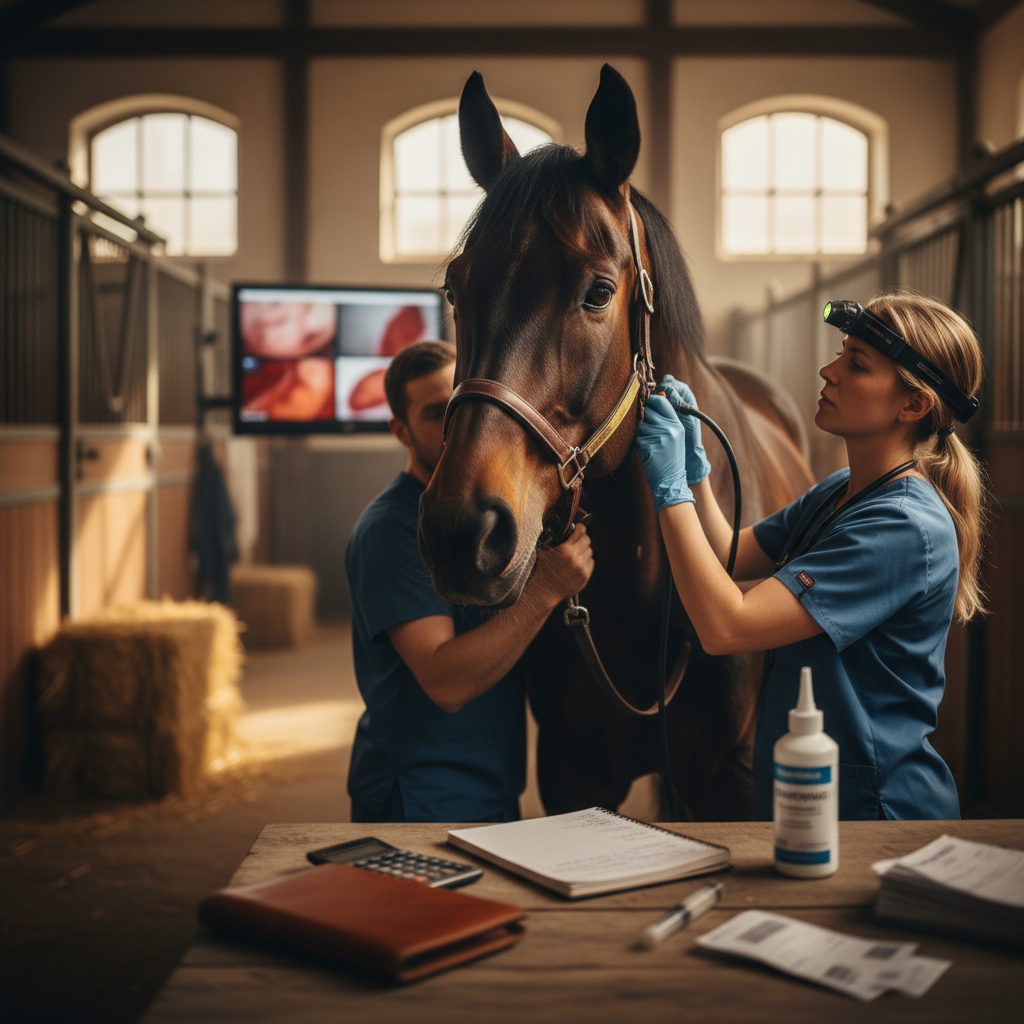
Ulcers are still a real management disease. Equine Gastric Ulcer Syndrome is usually discussed as injury to two different regions of the stomach — squamous (ESGD) and glandular (EGGD) — which can have different risk patterns and may be treated differently. Your veterinarian will say which, if either, is in front of the camera. Signs can be obvious (colic, grinding, weight loss, reluctance to work) or almost invisible. A normal appetite does not rule ulcers out, and a "grumpy" horse does not rule them in. Gastroscopy is generally described as the diagnostic gold standard; sedation, a fast, and a look at the stomach are clinical details for the attending veterinarian.
Prevention that does not need a price list
Forage first. AAEP's fetched page points prevention at removing predisposing factors and reducing acid. The ration tools we already use in this series support that:
- Keep fibre at or above one percent of body weight (Agdex 460/51-1, 2008), and plan most adults near the usual 1.5 to 2 percent forage-heavy intake unless a veterinarian directs otherwise. See How Much Hay Does a Horse Eat a Day? and the horse feed calculator.
- Avoid long stretches with an empty stomach when you can. Minnesota favours forage, including the option of a small hay meal before work.
- Large grain meals are a common risk factor in clinical discussions; how much concentrate a particular horse may have is a ration question, not a blog cutoff we will invent.
- Alfalfa is often discussed as a buffering forage for some ulcer-prone horses; it is the wrong forage for some metabolic or kidney cases. See Feeding the Senior Horse and the Henneke article before you "just add alfalfa."
- Stress, stall time, travel, and NSAID use are veterinary conversations. A show budget (see How to Budget for a Horse Show Season in Canada) should include the management cost of keeping forage in front of a travelling horse, not only entry fees.
Drugs such as omeprazole, and products sold as GastroGard or UlcerGard, are prescription or labelled veterinary matters in the jurisdiction where you buy them. This article will not compare compounded pastes, invent a cheaper alternative, or tell you how many days until a horse "feels better." Over-the-counter antacids are not a substitute for a diagnosis. If the horse is in work as a racehorse or a show horse, the AAEP figures above are a reason to talk to your veterinarian before the season, not after a poor weekend.
FAQ
Can I treat ulcers with over-the-counter antacids alone? Do not skip a veterinary diagnosis. This article will not endorse a drugstore protocol.
Why is compounded omeprazole sometimes cheaper, and is it effective? That is a question for your veterinarian and the regulator where you live, not a blog comparison.
How soon will a horse feel better on treatment? Ask the attending veterinarian, and plan a follow-up exam if they recommend one.
What is the difference between GastroGard and UlcerGard? Ask your veterinarian or read the official labels. This article does not summarize Canadian drug labels.
How do I lower risk at home? Forage first, fewer empty-stomach hours, a closer look at grain, and a management plan for travel and stall time — with veterinary help if the horse already has signs.
Sources
- American Association of Equine Practitioners, "Reduce Your Horse's Gastric Ulcer Risk" (publish date listed 1 March 2021). https://aaep.org/resource/reduce-your-horses-gastric-ulcer-risk/
- Alberta Agriculture and Rural Development, Nutrition and Feeding Management for Horse Owners (Agdex 460/51-1, 2008).
This article is general information, not veterinary advice. Talk to your veterinarian about your horse.