Equine Trailer Safety: Pre-Purchase & Maintenance Essentials
By Mark Dunlop
Transporting horses safely demands a thorough understanding of trailer integrity. Learn critical pre-purchase and ongoing maintenance checks to protect your equine investment.
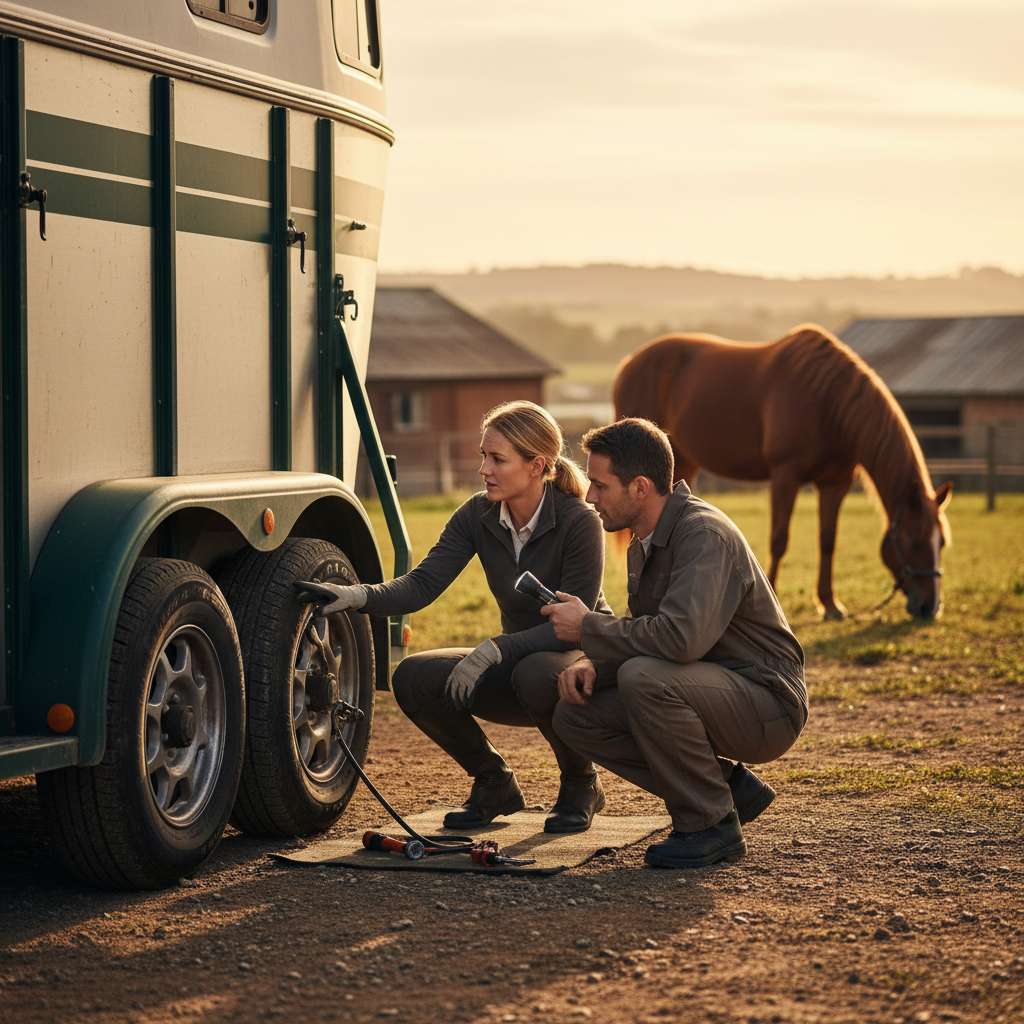
In the United States, over 2 million horses are transported annually, making trailer safety a paramount concern for every horse owner. A well-maintained horse trailer isn't just a convenience; it's a critical safety device that safeguards your equine partner and other road users. This article delves into the essential pre-purchase evaluations and ongoing maintenance checks for horse trailers, providing practical, actionable advice to ensure safe transport.
Why Trailer Safety Matters: Beyond the Obvious
Equine transport inherently carries risks, from sudden stops to unforeseen road hazards. A compromised trailer can exacerbate these risks, leading to severe injuries for horses and humans, significant financial losses, and potentially legal liabilities. The investment in a quality, safe trailer and its consistent upkeep is an investment in peace of mind and equine welfare.
Common Trailer-Related Accidents & Failures:
- Tire Blowouts: Often due to improper inflation, aging, or overloading.
- Structural Fatigue: Especially in older or heavily used aluminum and steel frames.
- Brake Malfunctions: Leading to loss of control, particularly on descents.
- Ramp/Door Failures: Can result in horses escaping or sustaining injuries during loading/unloading.
- Electrical Shorts: Posing fire risks, especially with older wiring or DIY modifications.
Pre-Purchase Inspection: A Critical Evaluation
Whether buying new or used, a meticulous pre-purchase inspection is non-negotiable. For used trailers, consider a professional inspection by a qualified mechanic specializing in trailers, especially if you're not experienced in such evaluations.
Frame & Structure: The Backbone of Safety
Steel Trailers: Inspect for rust, particularly at welds, undercarriage, and areas exposed to moisture (e.g., around wheel wells, ramp hinges). Surface rust might be cosmetic, but deep, pitting rust compromises structural integrity. Pay attention to the tongue, gooseneck (if applicable), and axle mounts.
Aluminum Trailers: While rust-resistant, aluminum can suffer from fatigue cracks, especially at stress points like welds, where structural components meet, or around fender wells. Look for any signs of corrosion (white powdery oxidation) which can weaken the material. Check for bent or twisted frame members.
Floor Integrity: This is arguably the most critical structural component for horse safety. Most trailer floors are either wood, aluminum plank, or Rumber-style material.
- Wood Floors: Pressure-treated pine or oak are common. Thoroughly check for rot, soft spots, splintering, or insect damage. Use a screwdriver or awl to probe the wood, especially where urine and moisture collect. Pay close attention to areas around the wheel wells and under mats. Look for gaps between planks.
- Aluminum Plank Floors: Inspect for corrosion, stress cracks, and bending. Ensure planks are securely fastened and that no sharp edges are exposed.
- Rumber/Composite Floors: Generally durable, but check for cracks, delamination, or excessive wear. Ensure they are properly supported and fastened.
Ramps & Doors: Test all ramps and doors for smooth operation. Latches should be secure and operate easily without excessive force. Check hinges for wear, rust, or bending. Ramps should have adequate traction material and be free of holes or soft spots. Ensure pop-up escape doors are functional.
Axles, Wheels & Tires: Your Trailer's Connection to the Road
Axles: Check for any visible bending or damage. Look for leaks around grease seals. A common issue is a "sprung" axle, where the axle is bent upwards, causing unusual tire wear. This is best assessed by a professional or by observing the trailer from behind on a flat surface.
Tires: This is where many owners cut corners, often with disastrous results. ST (Special Trailer) tires are designed for heavier loads and different sidewall stresses than passenger vehicle tires. Never use passenger tires on a horse trailer.
- Date Code (DOT Number): Locate the four-digit date code (e.g., "1523" means 15th week of 2023). Tires should ideally be replaced every 5-7 years, regardless of tread depth, due to rubber degradation (dry rot). A tire may look good but be structurally compromised.
- Tread Depth: Ensure adequate tread. While minimum legal depth varies by state, generally 2/32 inch is the minimum, but more is always safer for wet conditions.
- Sidewalls: Inspect for cracks, bulges, cuts, or uneven wear patterns. Uneven wear can indicate alignment or suspension issues.
- Spare Tire: Ensure you have a spare tire in good condition, properly inflated, and easily accessible. It's not a spare if it's flat or degraded.
Wheels & Bearings: Inspect wheel rims for cracks, bends, or excessive rust. Check lug nuts for tightness and ensure none are missing. Wheel bearings require regular greasing (typically annually or every 10,000-12,000 miles, but check your trailer manual). Listen for grinding noises during a test pull, which can indicate bearing issues. If buying used, strongly consider having a shop repack or replace bearings.
Brakes & Electrical: Essential Control & Visibility
Brakes: Most horse trailers utilize electric drum brakes. Verify that the trailer has a working breakaway kit, which applies the brakes automatically if the trailer detaches from the tow vehicle. Test the brake function with your tow vehicle's brake controller. Listen for grinding, squealing, or pulsating. Check for worn brake pads/shoes and corrosion in the drums.
Electrical System: Test all lights: running lights, brake lights, turn signals, and reverse lights. Check interior lights. Inspect wiring for frayed insulation, exposed wires, or poor connections. Corrosion in connectors is a common issue; clean them with a wire brush and apply dielectric grease.
Ongoing Maintenance: Your Safety Strategy
Consistent maintenance is less about fixing problems and more about preventing them. Establish a routine schedule for checks.
Pre-Trip Inspections: Every Time You Haul
Before every trip, perform a quick but thorough walk-around:
- Tires: Check tire pressure (including spare) to manufacturer recommendations (found on the tire sidewall or trailer placard), and inspect for visible damage.
- Lights: Verify all lights function correctly.
- Hitch & Chains: Ensure the hitch is securely latched, safety chains are crossed and attached, and the breakaway cable is connected.
- Brakes: Do a quick brake check (manual override on controller) to confirm function.
- Doors & Ramps: Verify all are securely latched.
- Interior: Remove any loose items, check stall dividers, and ensure good ventilation.
Annual or Bi-Annual Servicing: Professional Touch
Schedule professional servicing at least annually, or bi-annually if you haul frequently or long distances. This typically includes:
- Wheel Bearing Repack/Replacement: Critical for preventing catastrophic wheel loss.
- Brake Inspection & Adjustment: Ensures even braking and optimal performance.
- Suspension Check: Leaf springs, torsion axles, and shocks wear out.
- Frame & Floor Inspection: A professional can identify hidden structural issues.
- Electrical System Check: Including battery condition for breakaway systems.
Flooring Maintenance
Regularly remove mats and thoroughly clean the trailer floor. Urine is highly corrosive to both wood and aluminum. Address any soft spots or areas of corrosion immediately. For wood floors, consider sealing them annually with a suitable wood preservative to extend their life.
Structural Reinforcement
Consider adding rubber matting or wall pads for impact protection inside the trailer. This can prevent injuries during sudden movements. Ensure all interior surfaces horses can contact are smooth and free of sharp edges. For larger horses, calculate approximate weight using a Horse Weight Calculator to ensure you stay within your trailer's Gross Vehicle Weight Rating (GVWR).
Tow Vehicle Compatibility
Your tow vehicle is as crucial as the trailer. Ensure it has the appropriate towing capacity for the fully loaded trailer (trailer weight + horses + tack + feed). Overloading is a common and dangerous mistake. Refer to your vehicle's owner's manual for exact specifications. When calculating feed needs for a trip, our Horse Feed Calculator can assist in planning.
More checks: hitch, interior, and long hauls in Canada
- Match the ball to the coupler. The coupler is stamped with its ball size, for example 2 in. or 2-5/16 in. Use that size, and confirm the coupler is fully seated and latched before you move.
- Chains and breakaway cable. Cross the safety chains under the coupler so they form a cradle. Attach the breakaway cable to the tow vehicle itself, not to the safety chains. Leave enough slack for turns but not so much that it drags. Keep the breakaway battery charged and test it with the wheels chocked.
- Interior. Divider padding should be intact. Butt and chest bars should be secure, and their quick-release mechanisms should work. Walls should have no sharp edges or protrusions. Adjustable windows and roof vents allow cross-ventilation. Lift the mats regularly to clean out urine and manure and to check the floor underneath.
- Suspension. Whether the trailer has leaf springs or torsion axles, look for broken springs, worn bushings, and leaking shocks during the annual service.
- Canadian transport rules for long hauls. Part XII of the federal Health of Animals Regulations sets a maximum of 28 hours without feed, safe water, and rest for equines. The clock includes loading and unloading. It restarts only after the horse has had feed, water, and at least 8 consecutive hours of rest. The limit is 12 hours for a compromised animal, and equines may not be moved in a conveyance with more than one deck. These are legal maximums, not targets. Plan water and rest stops around your horse and the weather, and talk to your veterinarian about fitness to travel.
Sources: Health of Animals Regulations, C.R.C., c. 296, s. 152.2 (https://laws-lois.justice.gc.ca/eng/regulations/C.R.C.,_c._296/page-13.html); Canadian Food Inspection Agency, "Then vs. Now – Humane Transportation Regulations" (https://inspection.canada.ca/en/animal-health/terrestrial-animals/humane-transport/then-vs-now-humane-transportation-regulations); Canadian Veterinary Journal, "Canada's animal transport regulations and the veterinarian's role" (https://pmc.ncbi.nlm.nih.gov/articles/PMC9282547/).
FAQs: Trailer Safety
Q: How often should I check my trailer tires? A: Before every trip, check pressure and visually inspect for damage. Replace tires every 5-7 years regardless of tread, due to age-related degradation. The "The Horse Magazine" often publishes articles reinforcing this guideline, stressing that age is a major factor, not just wear.
Q: What's the most common trailer safety oversight? A: Improper tire inflation and outdated tires are frequently cited by organizations like the AAEP (American Association of Equine Practitioners) as leading causes of trailer breakdowns and accidents. Many owners also neglect regular wheel bearing maintenance.
Q: Can I use regular car tires on my horse trailer? A: No. Horse trailers require ST (Special Trailer) tires, which are constructed differently to handle heavier loads, consistent highway speeds, and different side-to-side stresses than passenger vehicle tires. Using passenger tires can lead to premature failure.
Q: How do I know if my trailer is overloaded? A: Locate your trailer's Gross Vehicle Weight Rating (GVWR) on its VIN plate. This is the maximum permissible total weight of the trailer and its contents. Weigh your empty trailer, then add the estimated weight of your horses, tack, and supplies. Your total should never exceed the GVWR. Many public scales (like those at truck stops) can provide accurate weights.
Q: What's a breakaway kit and why is it important? A: A breakaway kit is a safety device required on most trailers with electric brakes. If the trailer detaches from the tow vehicle, a pin is pulled, activating a self-contained battery to apply the trailer brakes, preventing it from becoming a runaway projectile. Test its functionality periodically, usually by pulling the pin while parked (ensure wheel chocks are in place).
By following these rigorous pre-purchase and maintenance guidelines, you significantly reduce the risks associated with equine transport. Your proactive approach ensures your horses travel safely, comfortably, and arrive ready for their destination. Safe hauling is responsible horsemanship. Remember, when in doubt, consult a professional trailer mechanic or a qualified equine veterinarian for horse-specific concerns. While considering expenses for transport, don't forget the cost of hay; our Hay Bale Cost Calculator can help you budget for the journey ahead.
This article is general information, not veterinary advice. Talk to your veterinarian about your horse.