Forage Quality: A Deep Dive for Optimal Equine Health
By Claire Halden
Unlock the secrets to superior equine nutrition by understanding how to accurately evaluate forage quality, from lush pastures to every hay bale. Your horse's health depends on it.
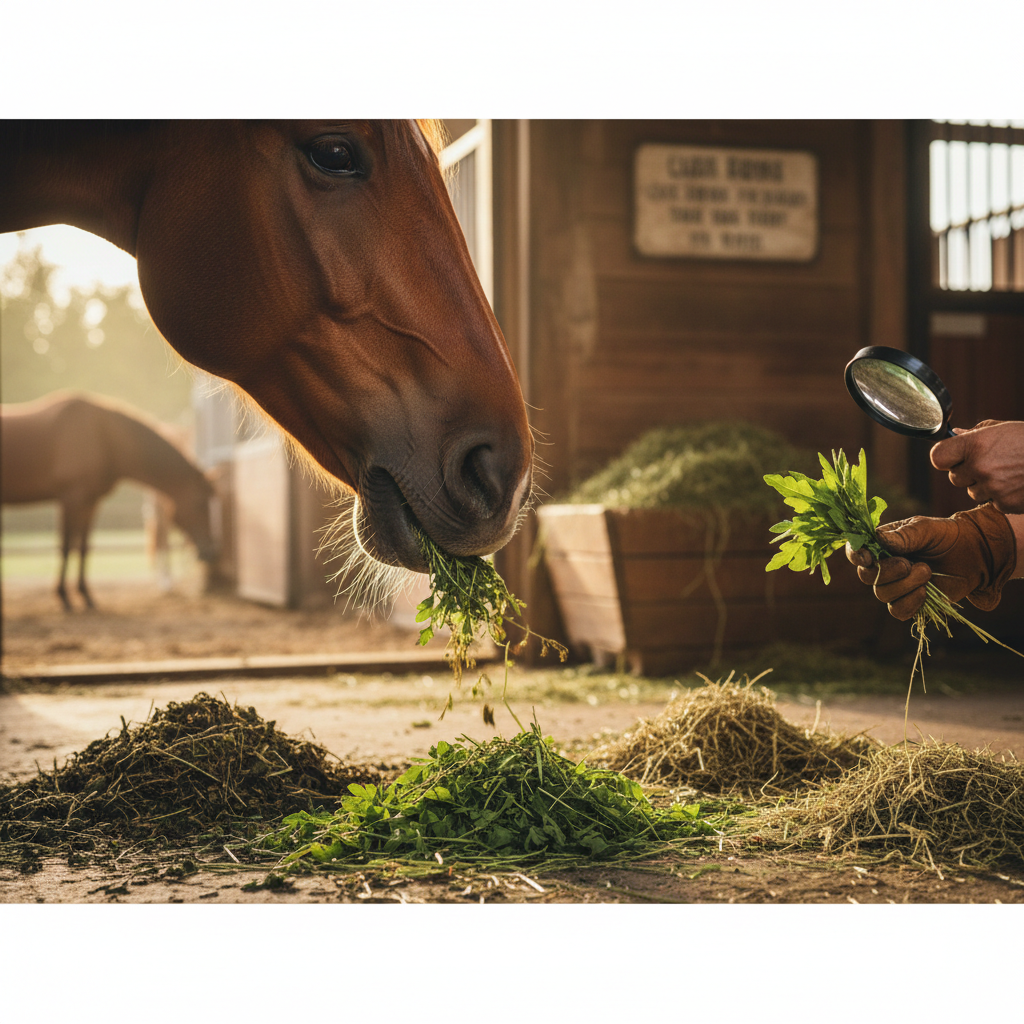
More than 50% of a horse's diet should consist of forage, yet many horse owners underestimate the profound impact of forage quality on equine health. A seemingly simple hay bale can contain wildly varying nutritional profiles, leading to either optimal well-being or a cascade of health issues. Understanding how to evaluate forage, whether in a sprawling pasture or a compressed hay bale, is fundamental to proactive equine management.
The Bedrock of Equine Nutrition: Why Forage Quality Matters
Forage, comprising pasture grasses and hay, is the cornerstone of a horse's digestive health and overall vitality. It provides essential fiber for gut motility, supports a healthy microbiome, and supplies critical vitamins, minerals, and energy. Poor quality forage can lead to digestive upset like colic or laminitis, nutritional deficiencies, poor performance, and even increased susceptibility to illness. Conversely, high-quality forage can reduce the need for expensive concentrates, promoting a more natural and cost-effective feeding program.
Understanding the Equine Digestive System
The horse is a non-ruminant herbivore with a unique digestive system designed for continuous grazing. The hindgut, particularly the cecum and large colon, is home to a vast microbial population that ferments fiber into volatile fatty acids (VFAs), a primary energy source. Consistent access to appropriate forage maintains this delicate microbial balance. Disruptions from inadequate fiber or sudden dietary changes can trigger dysbiosis, leading to serious health problems.
Pasture Evaluation: Beyond Green Grass
A green pasture doesn't automatically equate to high-quality forage. Several factors influence the nutritional value and safety of grazed forage.
Botanical Composition
Ideal pastures typically contain a mix of cool-season grasses (e.g., orchardgrass, timothy, tall fescue) or warm-season grasses (e.g., Bermuda grass, bahiagrass), and legumes (e.g., clover, alfalfa). Each offers different nutritional benefits. For instance, legumes are generally higher in protein and calcium. Dominance by undesirable species, such as weeds or toxic plants, reduces nutritional value and poses health risks.
Stage of Maturity
Young, vegetative grass is generally higher in protein and digestibility. As grass matures and produces seed heads, its fiber content (NDF, ADF) increases, while protein and energy density decrease. While mature forage still provides essential fiber, it may not meet the needs of horses with higher caloric demands, such as lactating mares or performance horses.
Soil Health and Fertilization
Soil nutrient levels directly impact the nutrient content of the forage. Regular soil testing (every 3-5 years) is crucial to identify deficiencies and apply appropriate fertilizers. For example, selenium-deficient soils can lead to forage low in this essential trace mineral, requiring supplementation. Over-fertilization, especially with nitrogen, can lead to excessively lush growth high in non-structural carbohydrates (NSCs), a concern for insulin-resistant horses.
Management Practices
Rotational grazing prevents overgrazing and allows pastures to recover, maintaining plant health and density. Mowing to control weeds and remove mature seed heads can encourage new, more nutritious growth. Avoid grazing pastures immediately after heavy fertilization or herbicide application, following product label guidelines for withdrawal periods.
Hay Evaluation: A Closer Look at Stored Forage
Hay constitutes the primary forage source for many horses, particularly during winter or in areas with limited pasture. Thorough hay evaluation is critical.
Visual and Olfactory Assessment
- Color: Good quality hay is typically bright green, indicating proper curing and minimal nutrient loss. Brown or yellow hay might be sun-bleached or very mature, suggesting lower nutrient content. Black spots or dark areas indicate mold.
- Leafiness: Leaves contain the most nutrients. Stemmy hay, characteristic of mature plants, indicates lower digestibility and nutrient density. Run your hand through the hay; excessive stemminess will be evident.
- Texture and Softness: Soft, pliable hay is more palatable and digestible. Coarse, rigid stems are less appealing and harder for horses to chew and digest.
- Smell: High-quality hay has a fresh, slightly sweet aroma. A dusty, musty, sour, or moldy smell indicates spoilage and should be rejected. Horses are sensitive to mold and may refuse it, or worse, ingest harmful mycotoxins.
- Absence of Weeds, Dust, and Foreign Material: Visually inspect for noxious weeds, baling twine, plastic, or debris. Excessive dust can irritate a horse's respiratory system, contributing to conditions like Recurrent Airway Obstruction (RAO).
Hay Type and Nutritional Profile
Common hay types include: Timothy, Orchardgrass, Alfalfa, and Bermuda. Each has a distinct nutritional profile.
- Timothy: A popular cool-season grass hay, generally moderate in protein (8-12%) and calories, often chosen for easy keepers or horses with lower energy needs. USDA analysis shows average NDF around 55-65% and ADF around 30-40%.
- Orchardgrass: Another cool-season grass, often slightly higher in protein (10-14%) and calories than timothy. It can be more palatable and grows well in various climates.
- Alfalfa: A legume hay, significantly higher in protein (15-20%), calcium, and calories than grass hays. Excellent for growing horses, lactating mares, or performance horses requiring more dense nutrition. However, its high calcium content needs balancing with other feeds for some horses.
- Bermuda Grass: A warm-season grass hay, common in Southern states. Quality can vary widely; finely stemmed Bermuda can be comparable to other grass hays, but coarser versions may be less digestible.
Understanding regional availability and cost is also vital. For example, in the Midwest, good quality timothy might range from $6-10 per small square bale, while alfalfa could be $8-12. In drought-stricken areas, prices can easily double. Use a Hay Bale Cost Calculator to assess value per ton based on your local prices.
Hay Testing: The Gold Standard
While visual inspection is helpful, a laboratory hay analysis provides the definitive nutritional profile. This is especially crucial for horses with specific dietary needs (e.g., metabolic syndrome, Cushings, growing horses) or if feeding large quantities from a single source.
Key Metrics in a Hay Analysis Report:
- Dry Matter (DM): The percentage of the feed that is not water. Essential for calculating nutrient intake on a dry matter basis.
- Crude Protein (CP): Indicates the total protein content. Needs vary by age, activity, and reproductive status (e.g., adult maintenance: 8-10%; lactating mare: 14-16%).
- Acid Detergent Fiber (ADF): Highly indigestible fiber components (cellulose and lignin). Lower ADF (25-35%) indicates higher digestibility and energy content.
- Neutral Detergent Fiber (NDF): Total fiber content (hemicellulose, cellulose, lignin). Higher NDF (50-60% for most hays) means the hay is bulkier and less digestible. NDF values above 65% suggest very mature, low-quality hay.
- Non-Structural Carbohydrates (NSC): Includes WSC (Water Soluble Carbohydrates) and Starch. Crucial for horses with metabolic issues (e.g., Insulin Dysregulation, Laminitis). Aim for NSC levels below 10-12% for these sensitive individuals, as recommended by veterinary professionals like those at the AAEP. NSC can range from 8-20% or more in typical hays.
- Digestible Energy (DE): Expressed in Mcal/lb or Mcal/kg. Indicates the energy density of the hay. Important for determining if the hay alone meets the horse's caloric needs. Use a Horse Feed Calculator to factor hay DE into your horse's overall diet.
- Minerals: Calcium, Phosphorus, Magnesium, Potassium, Zinc, Copper, Selenium. Critical for bone health, muscle function, and numerous metabolic processes. Imbalances can lead to serious health issues. The Ca:P ratio should ideally be between 1.5:1 and 2:1.
How to Sample Hay for Testing:
- Use a Hay Probe: Essential for getting core samples from multiple bales (10-20% of your lot, or at least 10-20 bales from each cutting/supplier).
- Sample Multiple Bales: Collect samples from different bales and mix them thoroughly to create a composite sample representative of the entire lot.
- Seal and Label: Place the composite sample in a sealed plastic bag, label it clearly, and send it to a reputable forage testing laboratory.
Practical Application: Matching Forage to Horse Needs
Once you understand forage quality, the next step is to match it to your horse's specific requirements. A performance horse or a lactating mare will have vastly different energy and protein needs than a retired companion horse or an easy keeper prone to weight gain.
- Easy Keepers/Metabolic Horses: Require lower DE, lower NSC (under 10-12%), and higher fiber. Mature grass hays or soaked hays are often suitable. Restrict pasture access, especially during peak growth seasons.
- Hard Keepers/Performance Horses/Growing Horses/Lactating Mares: Need higher DE, higher protein, and nutrient-dense forage. Alfalfa or early-cut grass hays are excellent choices. Monitor weight using a Horse Weight Calculator to ensure caloric intake is adequate.
- Average Horses (Maintenance): A good quality grass hay, typically moderate in protein and calories, is usually appropriate. Supplementation may be needed to balance minerals and vitamins.
Always introduce new hay gradually over 7-10 days to allow the horse's digestive system to adapt. Sudden changes can lead to colic or other digestive upsets.
Quick hay checks at the barn, and how much to feed
- Open a bale before you judge it. The outside of a bale can be sun-bleached while the inside is still green. Pull a flake from the middle before you reject a load on colour alone.
- Shake, feel, smell. Shake a handful. Heavy dust can mean dirt or mould spores, which irritate the airways. Hay should feel dry. Set aside any bale that feels damp, clammy, or warm, or that smells musty or sour, and raise it with the supplier before stacking the rest of the load.
- Look for weeds and debris. Weeds lower the value of the hay, and some plants are harmful. Twine, plastic, and wire do not belong in a feeder.
- Why fibre matters. Horses are hindgut fermenters. Microbes in the cecum and colon ferment the fibre in forage, which is why hay or pasture should be the base of the diet, and why a change of hay should be made gradually.
- How much forage. Alberta Agriculture's horse-feeding guide gives a general rule for a mature, idle horse: about 2% of body weight in dry matter per day, with 1.5% to 2% as forage. It treats 1% of body weight in forage as the minimum for a healthy gut. Work out your horse's numbers with the horse feed calculator and price them with the hay bale cost calculator.
Source: Alberta Agriculture and Rural Development, Nutrition and Feeding Management for Horse Owners (Agdex 460/51-1, 2008), https://www1.agric.gov.ab.ca/$Department/deptdocs.nsf/all/agdex12189/$FILE/460_51-1.pdf
Frequently Asked Questions (FAQ)
Q: How often should I test my hay?
A: It's recommended to test each new lot or cutting of hay you purchase, especially if it's a significant amount (e.g., enough to last several months). This ensures consistent knowledge of your forage's nutritional content.
Q: Can horses get all their nutrients from hay alone?
A: While good quality hay provides the bulk of a horse's nutritional needs, it often lacks adequate levels of certain trace minerals (e.g., copper, zinc, selenium) and vitamins (e.g., Vitamin E). A good quality vitamin/mineral supplement or a ration balancer is typically necessary to ensure a balanced diet.
Q: What does "low NSC hay" mean, and why is it important?
A: "Low NSC" hay refers to hay with a low content of Non-Structural Carbohydrates (sugars and starch), typically below 10-12% on a dry matter basis. This is crucial for horses with conditions like insulin dysregulation, laminitis, or Cushing's disease, as high NSC intake can trigger or worsen these conditions. A hay analysis is the only reliable way to confirm NSC levels.
Q: My hay smells musty, but my horse still eats it. Is it okay?
A: No. Musty hay indicates mold. Even if your horse eats it, mold can produce mycotoxins that cause respiratory problems, colic, liver damage, and other serious health issues. Always err on the side of caution and discard moldy hay. Consult your veterinarian immediately if you suspect your horse has consumed moldy forage.
Q: What is the ideal Ca:P ratio in hay?
A: The ideal Calcium to Phosphorus ratio for most horses is between 1.5:1 and 2:1, though a range of 1:1 to 6:1 can be tolerated. Imbalances can lead to skeletal issues, especially in growing horses. Alfalfa is high in calcium, often requiring careful balancing with other feeds or supplements if it's the sole forage source.
This article is general information, not veterinary advice. Talk to your veterinarian about your horse.