Equine Property Purchase: Beyond the House and Into the Barn
By Mark Dunlop
A barn-and-pasture checklist for buying horse property, using official Canadian boarding and acreage figures.
This article is educational. It is not a real-estate, legal, or environmental inspection. Use qualified inspectors, a lawyer, and your municipality's zoning office.
Equestrian Canada 2022 Table 4 found that 42 percent of Alberta equine owners, and 47 percent Canada-wide, boarded at least one equine. The complement is that many horses do live at home — but the survey does not give a single official share of owners who keep every horse at home.
If you are buying a place to keep horses, the house is not the whole property. The barn, the paddocks, the water, the manure, the driveway in March mud, and the zoning will decide whether the place works. The pasture stocking calculator and How Many Acres Does a Horse Need in Alberta? will size the land. The barn profit calculator will test whether a small boarding idea even pencils, using official 2022 board and 2026 input prices as labeled context — see How to Build a Boarding Barn Profit-and-Loss Statement.
The barn
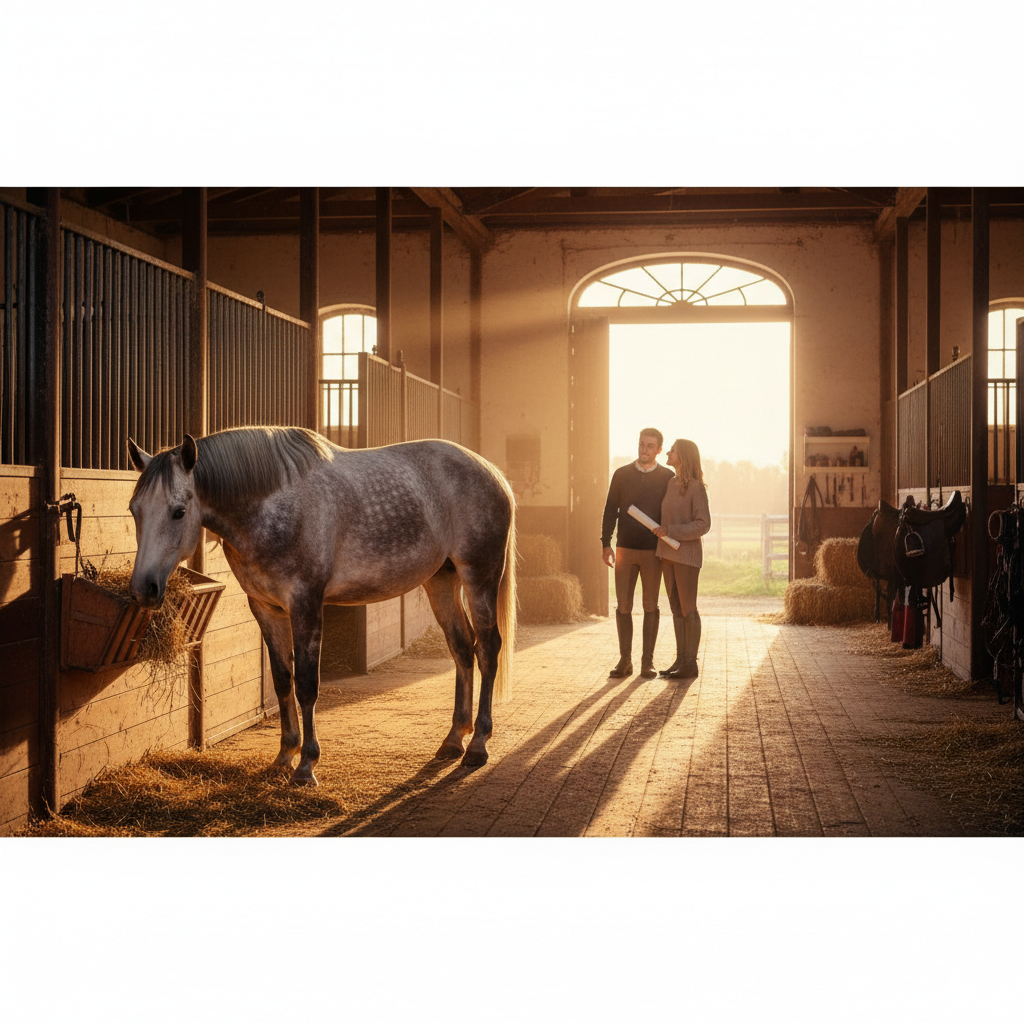
Walk it as a horse building, not as a garage with stalls. Look at the roof, the footing, the aisle width, and whether doors will open with snow against them. Agdex 460/722-1 (revised 1985) spends a chapter on stall and stable design, lighting, and water; it is dated, but it still flags drainage, electrical hookups, and siting barns and corrals with room for trucks and trailers, and it suggested placing barns some distance (it says 100 m) from the residence. Have a qualified inspector speak to structure, wiring, and plumbing. Alberta electrical work is under the Safety Codes Act; do not assume a homemade circuit is legal or safe. See barn fire prevention and automatic waterers.
Stalls should let the horse lie down and get up, and they should have ventilation that is more than a smell you get used to. Feed and tack rooms should be dry, rodent-tighter than the aisle, and not a hayloft over a row of stalls if you can help it — the 1985 fact sheet prefers feed storage out of the stable to reduce fire risk.
Pasture, fencing, water, and manure
Acreage on the listing is not the same as usable, fenced, drained pasture. Alberta's pasture season is short (Agdex 460/50-1, issued 1975, describes 3–4 months in western Canada). A pretty five acres can still be a dry-lot property with a large hay bill. Budget hay from official 2026 farm-gate figures and from invoices; see Alberta Hay Prices in 2026. Fencing is a separate budget; see fencing and official farm-input prices for posts and wire, which are material averages, not installed packages.
Water may be a well, a cistern, or a municipal line. In winter it has to stay unfrozen. A well's quality and quantity are inspection and testing questions. Manure is daily. The Alberta manure-and-pasture guide (Warren and Sweet) uses about 20 kg (45 lbs) of manure per horse per day. University of Minnesota says dry lots should provide at least 400 square feet per horse. See Sacrifice Paddock and Dry Lot Design. Ask where the previous owner piled manure, and whether the municipality cares.
Access, zoning, and a visit checklist
Driveways, turning radius for a trailer, and spring breakup matter as much as the kitchen. Agdex 460/722-1 already asked planners to allow ample space for parking and turning trucks and trailers, and to check local regulations.
Zoning, covenants, and easements decide whether you may keep horses, how many, and whether a suite, a shop, or a small boarding idea is even allowed. This article will not interpret your land-use bylaw. Read it, and have a lawyer read the title.
On the visit, work a list: stalls and ventilation; water in winter; fencing condition; pasture cover and wet corners; manure; electrical and heat; hay storage; driveway; neighbours; and the paper (zoning, water licence if any, permits for the barn). Equestrian Canada 2022 Table 6 Alberta recreation lines — capital costs for buildings and fences $448, facility repair $1,045, equipment repair $891 per equine per year — are 2022 survey anchors for upkeep, not a 2026 inspection report. See Beyond the Board Bill.
If you would rather board than buy, that is a valid reading of the 42 percent figure. See How Much Does It Cost to Board a Horse in Alberta?.
FAQ
Do most Canadian horse owners keep horses at home? In 2022, 42% of Alberta owners boarded at least one equine (Equestrian Canada Table 4). That figure is not a share of owners who keep every horse at home.
How many acres do I need? There is no single official 2026 figure. See the acres article and the stocking calculator, and treat 1975 Agdex planning figures as dated official context.
Should I buy a property with a homemade barn electrical system? Have it inspected. Permits and the Canadian Electrical Code are the owner's problem in Alberta, not the seller's memories.
What official upkeep figures can I use in an offer budget? EC 2022 Table 6 Alberta recreation facility lines, clearly dated, plus current quotes. Do not invent a percentage of purchase price.
Sources
- Equestrian Canada, Socio-Economic Impact Assessment, Tables 4 and 6 (2022). https://equestrian.ca/wp-content/uploads/2024/05/EC-Impact-Assessment-Supplementary-Information.pdf
- Alberta Agriculture, Horse Handling Facilities, Agdex 460/722-1 (revised 1985). https://open.alberta.ca/dataset/808ca330-589e-4fad-95b2-0dfac083c314/resource/4b98390c-5140-4ba3-9624-9821d7faa974/download/163010276893-horse-handling-facilities.pdf
- Alberta Agriculture, The Horse: Pasture and Feeding, Agdex 460/50-1 (issued 1975).
- Government of Alberta, "Permits and Alberta's safety code system." https://www.alberta.ca/permits-and-albertas-safety-code-system
This article is general information, not veterinary advice. Talk to your veterinarian about your horse.